Few places along the Inca Trail capture the imagination and challenge the human spirit like Dead Woman’s Pass in Peru. Known locally as Warmiwañusqa (in Quechua), this breathtaking mountain pass stands as the highest point of the Inca Trail to Machu Picchu, reaching an elevation of 4,215 meters (13,828 feet) above sea level.
For many trekkers, Dead Woman’s Pass represents both the physical and emotional peak of their journey — a moment of triumph that blends exhaustion, awe, and spiritual connection to the ancient path of the Incas. This comprehensive guide will walk you through everything you need to know: the history, elevation, weather, preparation tips, and what it really feels like to conquer this iconic summit.
What Is Dead Woman’s Pass?
Dead Woman’s Pass (Warmiwañusqa) is a mountain saddle located on the classic 4-day Inca Trail route between Cusco and Machu Picchu. It lies between two high Andean valleys and connects the campsites of Llulluchapampa (on the way up) and Pacaymayo (on the way down).
The name “Dead Woman’s Pass” comes from the shape of the surrounding mountains, which from a distance resemble a woman lying on her back — her head, chest, and hips outlined against the sky. Despite its morbid name, there’s nothing grim about this place; it’s one of the most majestic and scenic spots on the entire trail.
Location of Dead Woman’s Pass
Region: Cusco, Peru
Trail: Classic Inca Trail to Machu Picchu
Elevation: 4,215 m (13,828 ft)
Coordinates: Approx. 13°13′ S, 72°29′ W
Distance from Cusco: ~82 km by trailhead (Km 82 near Ollantaytambo)
Distance to Machu Picchu: About 20 km remaining after the pass
Dead Woman’s Pass is reached on Day 2 of the Inca Trail, which is widely considered the hardest day of the entire trek due to the steep and sustained ascent.
The Route to Dead Woman’s Pass
Day 2 of the Inca Trail – The Challenge
The climb begins early in the morning after breakfast at Ayapata or Llulluchapampa camp, depending on your itinerary. The trek starts through lush cloud forest, crossing small streams, and gradually becomes steeper as the vegetation thins out.
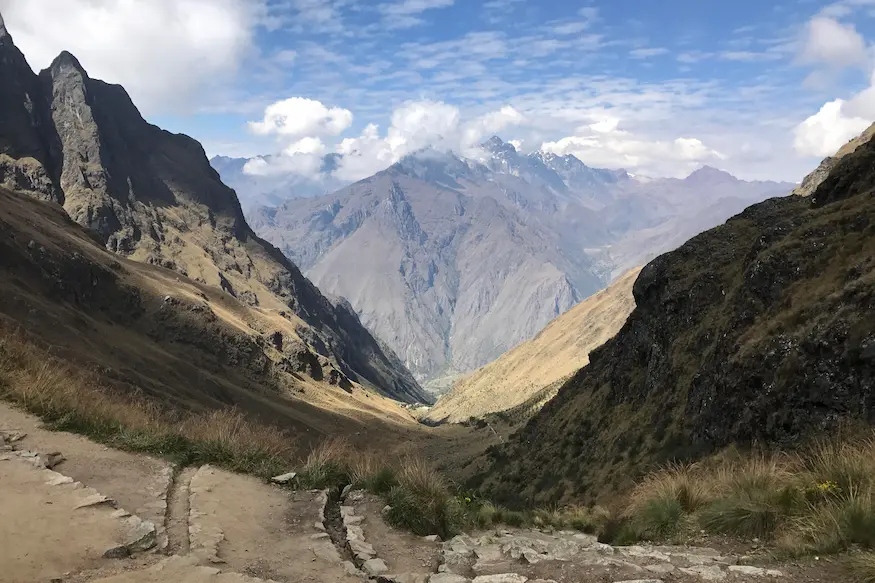
After about 3–4 hours of continuous uphill hiking, you’ll reach the famous Warmiwañusqa Pass — the highest altitude of the entire Inca Trail. From here, trekkers can look back at the snow-capped peaks of the Veronica and Huayanay mountains, and ahead toward the next valley where they’ll descend to the Pacaymayo campsite.
Typical Timetable
| Section | Time | Elevation Gain |
|---|
| Llulluchapampa → Dead Woman’s Pass | 3–4 hours | +400 m |
| Dead Woman’s Pass → Pacaymayo | 1.5–2 hours | -600 m |
It’s a long and demanding day — roughly 10 to 11 km in total — but the sense of achievement at the summit makes it one of the most rewarding moments of the Inca Trail.
The Meaning of “Warmiwañusqa”
“Warmiwañusqa” is derived from Quechua, the ancient language of the Incas, meaning “Dead Woman.”
Local legend suggests that the mountain resembles the profile of a reclining woman, visible when viewed from certain angles along the trail.
Some guides also recount mythical tales — that a noblewoman perished at this altitude while traveling to Machu Picchu, or that the name symbolizes the death of the old self and rebirth at Machu Picchu, reflecting the spiritual nature of the journey.
Whichever interpretation you prefer, it’s a powerful reminder that trekking the Inca Trail is not just a physical challenge but also a spiritual pilgrimage through time and nature.
The Altitude of Dead Woman’s Pass
At 4,215 meters (13,828 feet), Dead Woman’s Pass is the highest elevation point trekkers will encounter on the Inca Trail.
To put it into perspective:
Cusco: 3,400 m (11,154 ft)
Llulluchapampa Camp: 3,800 m (12,467 ft)
Dead Woman’s Pass: 4,215 m (13,828 ft)
Machu Picchu: 2,430 m (7,972 ft)
That means hikers ascend nearly 800 meters (2,600 feet) in just a few hours. For those not properly acclimatized, the altitude can cause shortness of breath, fatigue, or mild altitude sickness (soroche).
Tips to Prevent Altitude Sickness:
Spend at least 2–3 days acclimatizing in Cusco or the Sacred Valley before starting the trek.
Drink plenty of water and coca tea, a traditional Andean remedy.
Avoid alcohol and heavy meals before trekking.
Walk slowly and breathe deeply; the key is steady pacing.
Bring medication like Diamox if recommended by your doctor.
Weather and Best Time to Hike Dead Woman’s Pass
The weather in the Andes can be unpredictable, but in general, the best months to trek are during the dry season, from April to October.
Dry Season (April–October)
Clear skies and stable weather
Crisp mornings and sunny afternoons
Cold nights, especially near Dead Woman’s Pass (0°C to 5°C)
Rainy Season (November–March)
Cloudy and humid, with frequent rain
Slippery trail conditions
Lush green scenery and fewer tourists
Most trekkers prefer May to September, when the path is dry and the views are crystal clear.
What to Pack for Dead Woman’s Pass
Because of the altitude and temperature variations, packing smart is crucial. Here’s a recommended checklist:
| Category | Essential Items |
|---|
| Clothing | Thermal layers, fleece jacket, waterproof jacket, hiking pants, gloves, warm hat |
| Footwear | Waterproof hiking boots with good ankle support |
| Gear | Trekking poles (reduce strain on knees during descent) |
| Accessories | Sunglasses, sunscreen (high UV levels), lip balm, headlamp |
| Hydration & Food | Water bottle or hydration pack, snacks, electrolytes |
| Health & Comfort | Altitude medication, personal first aid kit, toilet paper, wet wipes |
💡 Pro tip: Layer your clothes. Temperatures can change drastically from warm valleys to freezing high passes.
Campsites Near Dead Woman’s Pass
Most Inca Trail itineraries position trekkers to cross Dead Woman’s Pass early on Day 2. The main campsites used around the area are:
| Camp | Elevation | Description |
|---|
| Llulluchapampa | 3,800 m | Base camp before ascending the pass; scenic and peaceful |
| Pacaymayo | 3,600 m | Camp after the descent; offers great views and nearby streams |
| Ayapata | 3,300 m | Alternative camp before Llulluchapampa, often used for smaller groups |
Your trekking company will handle all logistics, including meals, tents, and porters.
The descent to Pacaymayo after reaching the pass can be steep and slippery, so trekking poles and proper footwear are highly recommended.
Physical Challenge – How Hard Is Dead Woman’s Pass?
Among all the sections of the Inca Trail, Dead Woman’s Pass is the most demanding. The thin air, steep gradient, and uneven stone steps make it a true test of endurance.
However, anyone with a reasonable level of fitness and good acclimatization can reach the summit successfully. You don’t need to be an athlete — just steady, patient, and determined.
Fitness Tips:
Train by walking uphill or climbing stairs while carrying a backpack.
Practice hikes at altitude if possible.
Pace yourself: take short breaks, hydrate frequently, and enjoy the views.
When you finally reach the top, you’ll likely celebrate with your fellow trekkers and guides — an emotional, unforgettable moment surrounded by panoramic Andean landscapes.
What You’ll See from the Top
From the summit of Warmiwañusqa, the views are spectacular.
To the north, deep valleys carved by ancient rivers stretch below. To the south, jagged peaks rise dramatically into the clouds. When the mist clears, you can see the distant snow-covered mountains of the Vilcabamba Range and the winding Inca Trail disappearing into the horizon.
Many trekkers describe this as the most beautiful and spiritual viewpoint on the Inca Trail — a place where the effort truly pays off.
Symbolism and Spiritual Meaning
In Andean tradition, mountains (or Apus) are considered sacred protectors.
For many travelers, reaching Dead Woman’s Pass feels like a rite of passage — a symbolic death of the ego, followed by spiritual renewal as they continue toward Machu Picchu.
Local guides often perform small coca leaf offerings at the top, giving thanks to Pachamama (Mother Earth) for safe passage and strength. It’s a deeply moving experience that connects modern adventurers with the ancient spirituality of the Incas.
Timeline of the Day – A Realistic Example
| Time | Activity |
|---|
| 5:00 AM | Wake-up and breakfast at Llulluchapampa |
| 6:00 AM | Begin the steep ascent toward Dead Woman’s Pass |
| 9:30–10:00 AM | Arrive at the summit – celebrate, rest, photos |
| 10:30 AM | Start the descent to Pacaymayo |
| 12:30–1:00 PM | Lunch and relaxation at camp |
Expect Day 2 to last 6–7 hours of hiking in total. Your guide will adapt the pace to the group’s ability.
Logistics and Permits
To hike Dead Woman’s Pass, you must book an authorized Inca Trail tour with a licensed operator.
Independent trekking is not allowed on the Inca Trail due to conservation regulations.
Permit Information:
Only 500 permits per day are issued (including guides and porters).
Permits typically sell out 3–6 months in advance, especially for May–August.
The Inca Trail is closed in February for maintenance.
If you can’t get a permit, consider alternatives like the Salkantay Trek or Lares Trek, which also offer spectacular mountain scenery.
Getting There from Cusco
All Inca Trail hikes begin at Km 82 (Piscacucho) near the town of Ollantaytambo, about a 3-hour drive from Cusco.
Trekkers start walking toward Wayllabamba, camp the first night, and reach Dead Woman’s Pass on the second day. From there, they continue to Machu Picchu, which is reached on Day 4 through the Sun Gate (Inti Punku).
Most tour packages include:
Transfers from Cusco
Professional bilingual guides
Camping gear and porters
Meals, permits, and return train tickets from Aguas Calientes
The Emotional Reward
Ask any trekker who has completed the Inca Trail, and they’ll tell you:
Dead Woman’s Pass is the hardest part — but also the most unforgettable.
Standing at 4,215 meters with the wind on your face, surrounded by ancient mountains, you realize why the Incas considered this land sacred. It’s a moment of humility, pride, and pure connection with nature.
For many, reaching the top brings tears of joy and a deep sense of accomplishment. It’s not just about the physical effort; it’s about the transformation you feel when you conquer something that once seemed impossible.
Continuing the Journey to Machu Picchu
After crossing Dead Woman’s Pass, trekkers descend into the Pacaymayo Valley, rest for the night, and continue toward the second pass and archaeological sites like Runkurakay, Sayacmarca, Phuyupatamarca, and Wiñay Wayna.
The journey ends with a sunrise arrival at Machu Picchu, the mystical citadel of the Incas — a perfect ending to an epic adventure.
Final Tips for Conquering Dead Woman’s Pass
Start slow, finish strong. The key is steady pacing.
Acclimatize well before the trek — stay a few days in Cusco.
Hire walking poles to protect your knees.
Travel light, carry only essentials in your daypack.
Respect nature and local culture. The trail is sacred.
Trust your guide — they know every step and will motivate you.
Celebrate your success! Few experiences compare to reaching Warmiwañusqa.
Why Dead Woman’s Pass Is the Soul of the Inca Trail
Dead Woman’s Pass in Peru is not just a mountain pass; it’s a symbol of endurance, faith, and connection. It challenges your body, humbles your spirit, and rewards your courage with views and emotions that last a lifetime.
When you finally stand at 4,215 meters, surrounded by clouds and history, you understand why thousands of people each year call this the most powerful moment of their entire trek.
It’s the true heart of the Inca Trail — where the past meets the present, and every step tells a story.