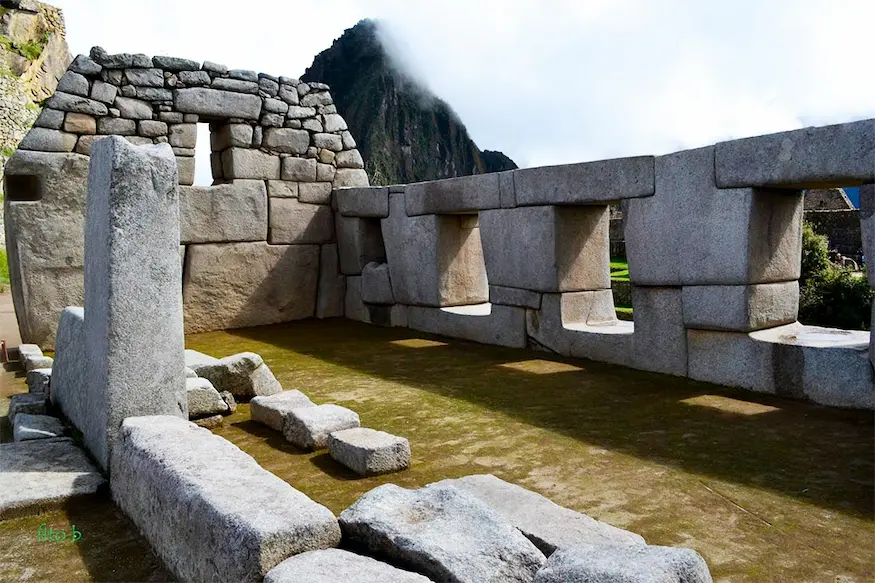
The Temple of the Three Windows in Machu Picchu is one of the most mysterious and symbolic structures of the Inca civilization. This monumental stone building reveals the perfection of Inca architecture, the depth of their cosmology, and the sacred connection they maintained with nature and the universe.
Located within the heart of Machu Picchu’s Sacred Plaza, this temple has fascinated travelers, historians, and archaeologists alike for over a century. Its three trapezoidal windows have inspired countless theories about their meaning — from mythological origins to astronomical observations.
In this complete guide, we will explore its history, architecture, meaning, and how to visit it during your Machu Picchu experience.
Location and Importance within Machu Picchu
The Temple of the Three Windows is located in the upper sector of Machu Picchu, specifically in the Hanan or “high” area of the citadel. It faces east, overlooking the majestic mountains and the deep Urubamba Valley.
This strategic location was not random. The Incas designed the temple to receive the first rays of the morning sun, symbolizing rebirth, light, and divine energy. It stands on the edge of the Sacred Plaza, together with two other important structures: the Main Temple and the Priest’s House.
This area formed the religious and ceremonial core of Machu Picchu — a place where rituals, offerings, and astronomical observations were performed. The placement of the Temple of the Three Windows reflects the Inca principle of duality and harmony between man, nature, and the cosmos.
Architecture and Construction Techniques
Mastery of Stonework
The Temple of the Three Windows in Machu Picchu is an extraordinary example of the Incas’ refined masonry. It is built with perfectly cut granite blocks, fitted together without any cement or mortar — a construction method that has resisted earthquakes for centuries.
The trapezoidal shape of the windows and walls is characteristic of Inca engineering, providing stability and balance to the entire structure. Each block was carved by hand using stone tools, polished, and placed with incredible precision.
Dimensions and Layout
The temple measures around 10 meters in length and 4 meters in width. Its eastern wall contains three trapezoidal openings — the famous “three windows.” Each one frames a unique view of the surrounding landscape, including the mountains of Huayna Picchu and Putucusi.
The rest of the walls have niches used to place sacred objects, ritual vessels, or figurines representing deities. These niches demonstrate that the temple had a ceremonial rather than a domestic purpose.
Symbolic Orientation
The windows face east, allowing sunlight to enter during sunrise, especially at specific times of the year such as the solstices. This orientation symbolized the arrival of Inti, the Sun God, whose light illuminated the sacred site and marked agricultural and spiritual cycles.
Symbolism and Meaning of the Three Windows
Representation of the Three Worlds
In Inca cosmology, the universe was divided into three planes of existence:
Hanan Pacha – the upper world, home of the gods and celestial beings.
Kay Pacha – the earthly world, where humans live.
Uku Pacha – the underworld, the realm of ancestors and the origins of life.
The three windows represent these cosmic dimensions. For the Incas, the temple symbolized the bridge between heaven, earth, and the underworld — a place where spiritual energy flowed between worlds.
The Myth of Paqariq Tampu
According to Inca mythology, the first ancestors of the empire, known as the Ayar brothers, emerged from a mythical cave called Paqariq Tampu or “The House of Dawn,” which had three windows.
The Temple of the Three Windows is believed to be a physical representation of that sacred place, honoring the myth of origin of the Inca civilization. From those windows, the first Incas “emerged into the light,” symbolizing the birth of their empire and their divine mission to bring order to the world.
Solar and Astronomical Symbolism
The Incas were exceptional astronomers. The alignment of the temple allowed priests to observe the path of the sun and calculate agricultural seasons. During the winter solstice, the first rays of light entered directly through the windows — a moment celebrated with rituals to honor the Sun God and ensure good harvests.
The play of light and shadow inside the temple transformed it into a living observatory, connecting architecture and astronomy in a single sacred act.
Ritual and Religious Function
A Center of Ceremonial Power
The Temple of the Three Windows was not a simple structure — it was a place for rituals of great importance. Offerings of corn, coca leaves, shells, and sometimes even animal sacrifices were made here to ask for fertility, protection, and balance in the natural world.
The elite priests and astronomers of the Inca empire likely performed purification ceremonies and solar worship rituals here, accompanied by chants, incense, and symbolic gestures.
Connection with the Sun and Water
The temple’s orientation toward the east also symbolized the birth of the sun over the Andean mountains, while the Urubamba River below represented the constant flow of life. Together, they embodied two vital elements in the Andean worldview: light and water — sources of growth and renewal.
Pilgrimage and Initiation
Some theories suggest that the Temple of the Three Windows served as a spiritual initiation site for chosen individuals or young nobles. Its limited access and sacred location reinforce the idea that this was a restricted ceremonial area reserved for the Inca elite and the priesthood.
Discovery and Archaeological Research
5.1 Early Discovery
Although Machu Picchu gained world fame after being brought to attention by explorer Hiram Bingham in 1911, local Quechua farmers and explorers like Agustín Lizárraga had already reached the site years before. When Bingham arrived, he found Lizárraga’s name inscribed inside the temple, dated 1902.
This confirms that the place was known to locals long before its “official” rediscovery.
Excavations and Findings
During early excavations, archaeologists found ritual artifacts, ceramic fragments, and small offerings, suggesting that the temple had a strong ceremonial function. Its architectural perfection also served as evidence that this area was among the most sacred within Machu Picchu.
Theories and Interpretations
Scholars have debated for decades the meaning of the Temple of the Three Windows. While some emphasize its astronomical and solar function, others interpret it as a symbolic representation of the Inca myth of creation.
Regardless of the theory, all agree on one point: the temple encapsulates the harmony between architecture, spirituality, and the surrounding Andean landscape.
Visiting the Temple of the Three Windows Today
6.1 How to Get There
The temple is part of the Sacred Plaza, which visitors reach after passing through the main agricultural terraces and urban sector. It is included in all official Machu Picchu circuits, whether you arrive via the Inca Trail, train, or bus from Aguas Calientes.
You will find it in the upper section of the archaeological complex, near other major landmarks such as the Main Temple and the Intihuatana Stone — the Inca solar clock.
Best Time to Visit
The best time to admire the Temple of the Three Windows is early in the morning, just after sunrise. The golden light enters through the windows, illuminating the stone walls and creating a mystical atmosphere that connects visitors directly with the ancient energy of the Incas.
Between May and October, the weather in Machu Picchu is dry and clear, offering the best visibility for photos and exploration.
Practical Tips
Wear comfortable, non-slip shoes for walking on stone and uneven surfaces.
Bring water, sunscreen, and a hat — mornings can be very sunny.
Respect all signs and avoid touching or leaning on the walls.
If possible, hire a certified local guide who can explain the deeper meanings and history of each site.
The Temple’s Legacy and Meaning for Modern Visitors
Visiting the Temple of the Three Windows in Machu Picchu is not just a photo opportunity — it’s an encounter with one of humanity’s greatest architectural and spiritual achievements.
Standing inside this temple and gazing through its windows toward the mountains and clouds, one can feel the same energy that inspired the ancient builders centuries ago.
The temple reminds us that the Incas were more than just great engineers; they were philosophers who built spaces to connect body and spirit, earth and sky, human and divine.
Today, the Temple of the Three Windows continues to symbolize harmony, balance, and the enduring presence of Inca wisdom in the heart of the Andes.