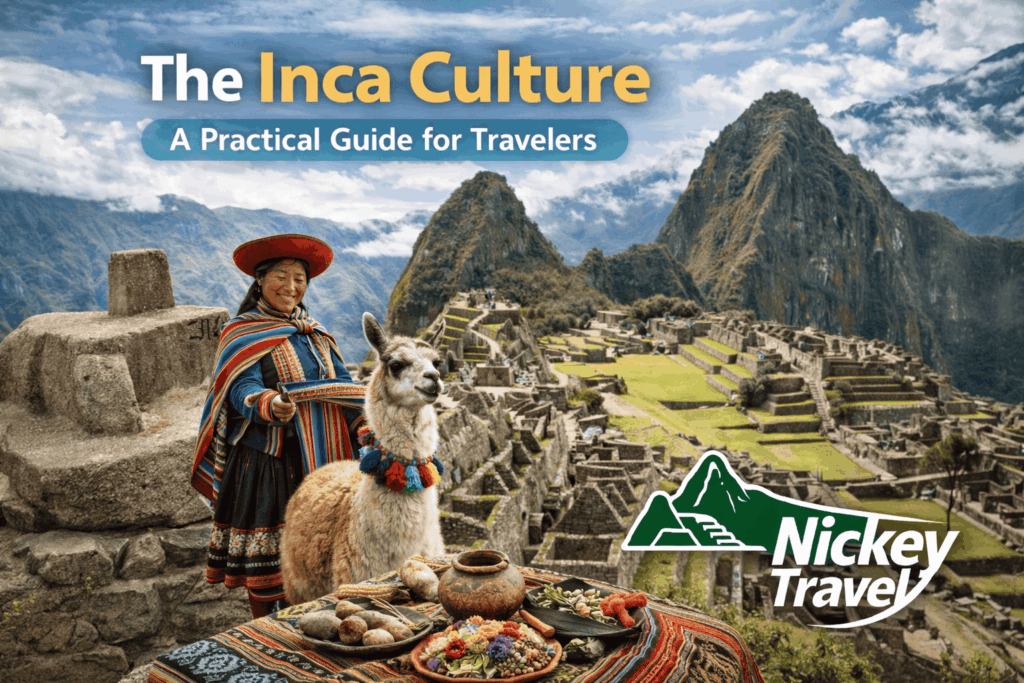
The Inca culture is one of the most fascinating civilizations in world history. Its legacy remains visible today through impressive architecture, advanced engineering, and living traditions that travelers can still experience in Cusco and the Andes.
This article offers a clear, practical, and traveler-focused overview of the Inca culture, helping visitors understand what they see, where it comes from, and why it matters during their journey through Peru.
What Was the Inca Culture?
The Inca culture developed in the Andean region of South America and reached its peak during the 15th century. The Inca Empire, known as Tawantinsuyu, became the largest empire in pre-Columbian America.
Key characteristics of the Inca culture include:
- Advanced stone architecture
- Agricultural innovation
- Social organization based on cooperation
- Strong spiritual beliefs connected to nature
These elements shaped daily life and continue to influence Andean communities today.
Daily Life in the Inca Culture
Understanding daily life helps travelers better appreciate archaeological sites.
Inca society was organized around:
- Farming and terrace agriculture
- Community work (ayni and minka)
- Respect for nature and the land
- Practical knowledge rather than written language
This system allowed the Incas to thrive in high-altitude environments.
Inca Architecture and Engineering
One of the most impressive aspects of the Inca culture is its architecture.
Examples include:
- Perfectly cut stonework without mortar
- Earthquake-resistant construction
- Extensive road networks connecting the empire
- Sophisticated water management systems
Sites such as Machu Picchu, Ollantaytambo, and Sacsayhuamán showcase this mastery.
Spiritual Beliefs of the Inca Culture
Spirituality was central to the Inca worldview.
The Incas believed in:
- Inti, the Sun God
- Pachamama, Mother Earth
- A strong connection between humans and nature
Many rituals and festivals today are rooted in these ancient beliefs.
Where Can Travelers Experience the Inca Culture Today?
Travelers can experience the Inca culture through:
- Archaeological sites in Cusco and the Sacred Valley
- Traditional Andean communities
- Cultural festivals and ceremonies
- Museums and guided historical tours
Guided experiences provide context and meaning beyond sightseeing.
You can explore cultural tours focused on the Inca heritage here:
Best Trek in Cusco
Why the Inca Culture Matters to Modern Travelers
Learning about the Inca culture transforms a trip into a deeper cultural experience.
It allows travelers to:
- Understand the historical importance of Peru
- Respect local traditions
- Appreciate engineering and sustainability practices
- Connect more meaningfully with destinations
Final Recommendation for Travelers
The Inca culture is not only history—it is a living legacy. Exploring it with professional guides and well-organized tours ensures a richer, more respectful travel experience.
For authentic cultural experiences, visit:
Contact us: Nickey Travel 👈