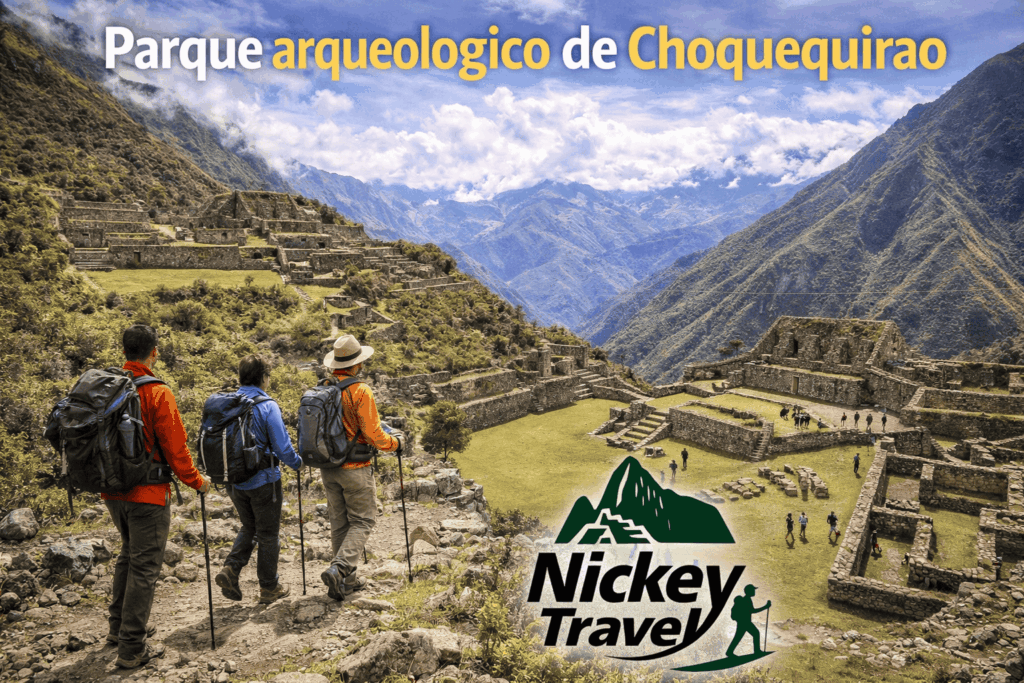
The Parque arqueologico de Choquequirao is one of Peru’s most impressive yet least visited archaeological treasures. Often called the “sister city of Machu Picchu,” this vast Inca complex remains largely untouched by mass tourism.
Located deep in the Andes Mountains, Choquequirao offers a powerful combination of history, adventure, biodiversity, and solitude.
For travelers seeking a true expedition rather than a crowded attraction, this is one of South America’s most extraordinary experiences.
Where Is Parque arqueologico de Choquequirao Located?
The Parque arqueologico de Choquequirao is located in the Cusco region of southern Peru, in the Vilcabamba mountain range.
It sits above the Apurímac River canyon, one of the deepest canyons in the world.
Distance from Cusco: Approximately 150 km (by road and trekking route).
Altitude
Choquequirao stands at approximately:
3,050 meters (10,007 feet) above sea level
Due to its elevation, proper acclimatization in Cusco is recommended before starting the trek.
What Does “Choquequirao” Mean?
The name Choquequirao comes from Quechua and is commonly translated as:
“Cradle of Gold”
or
“Golden Cradle”
The name reflects its historical and symbolic importance within the Inca Empire.
Some historians believe it served as a refuge for the Incas after the Spanish conquest.
How Long Is the Trek to Choquequirao?
The trek to Parque arqueologico de Choquequirao typically takes:
4 days round trip (minimum)
5 days for a more comfortable pace
8–9 days if combined with Machu Picchu
Daily hiking time:
6–8 hours per day
The trek is considered challenging due to steep ascents and descents.
Why Visit Parque arqueologico de Choquequirao?
Because it offers:
✔ Massive Inca terraces covering entire mountainsides
✔ Extremely low visitor numbers compared to Machu Picchu
✔ Authentic adventure experience
✔ Deep historical significance
✔ Spectacular canyon landscapes
Only a small percentage of Machu Picchu’s visitors ever reach Choquequirao.
It is ideal for explorers, photographers, and serious trekking enthusiasts.
What Can You Observe There?
At Parque arqueologico de Choquequirao you can explore:
The site covers over 1,800 hectares, but only about 30–40% has been excavated.
It is believed to be similar in size — or even larger — than Machu Picchu.
Flora Around Choquequirao
The ecological diversity is remarkable due to altitude variation.
You may encounter:
The region is part of a transitional ecosystem between high Andes and jungle.
Fauna of the Choquequirao Region
Wildlife includes:
The Apurímac canyon area is known for its biodiversity.
What Do People Eat During the Trek?
Meals during the Choquequirao trek typically include:
Quinoa soup
Rice and pasta dishes
Grilled chicken or trout
Fresh vegetables
Avocado
Coca tea for altitude
Herbal infusions
Local communities cultivate:
Corn
Potatoes
Beans
Fruits in lower valleys
Food is hearty and designed to provide energy for long trekking days.
Climate and Best Time to Visit
Dry Season (May–September):
✔ Clear skies
✔ Cooler nights
✔ Best trekking conditions
Rainy Season (November–March):
✔ Greener landscapes
✔ Slippery trails
✔ Fewer trekkers
Temperatures range between 5°C at night and 22°C during the day depending on altitude.
Historical Importance
Choquequirao is believed to have been:
A political and religious center
A strategic refuge during the Spanish invasion
A key administrative Inca site
It is one of the last strongholds associated with the final Inca resistance in Vilcabamba.
Why Choquequirao Is Called the “Hidden Machu Picchu”
Because:
✔ It is similar in architectural design
✔ It remains largely unexplored
✔ It receives only a fraction of visitors
✔ It requires effort to reach
Visiting Parque arqueologico de Choquequirao feels like discovering a lost city.
Who Should Visit Parque arqueologico de Choquequirao?
Ideal for:
Adventure travelers
Experienced hikers
History lovers
Cultural explorers
Photographers
Difficulty level: Moderate to challenging.
Final Reflection
The Parque arqueologico de Choquequirao is not just an archaeological site — it is an expedition into the heart of the Andes.
It offers solitude, history, biodiversity, and one of the most authentic trekking experiences in Peru.
👉 [Insert your booking link here]
Discover the hidden Inca city before the world does.