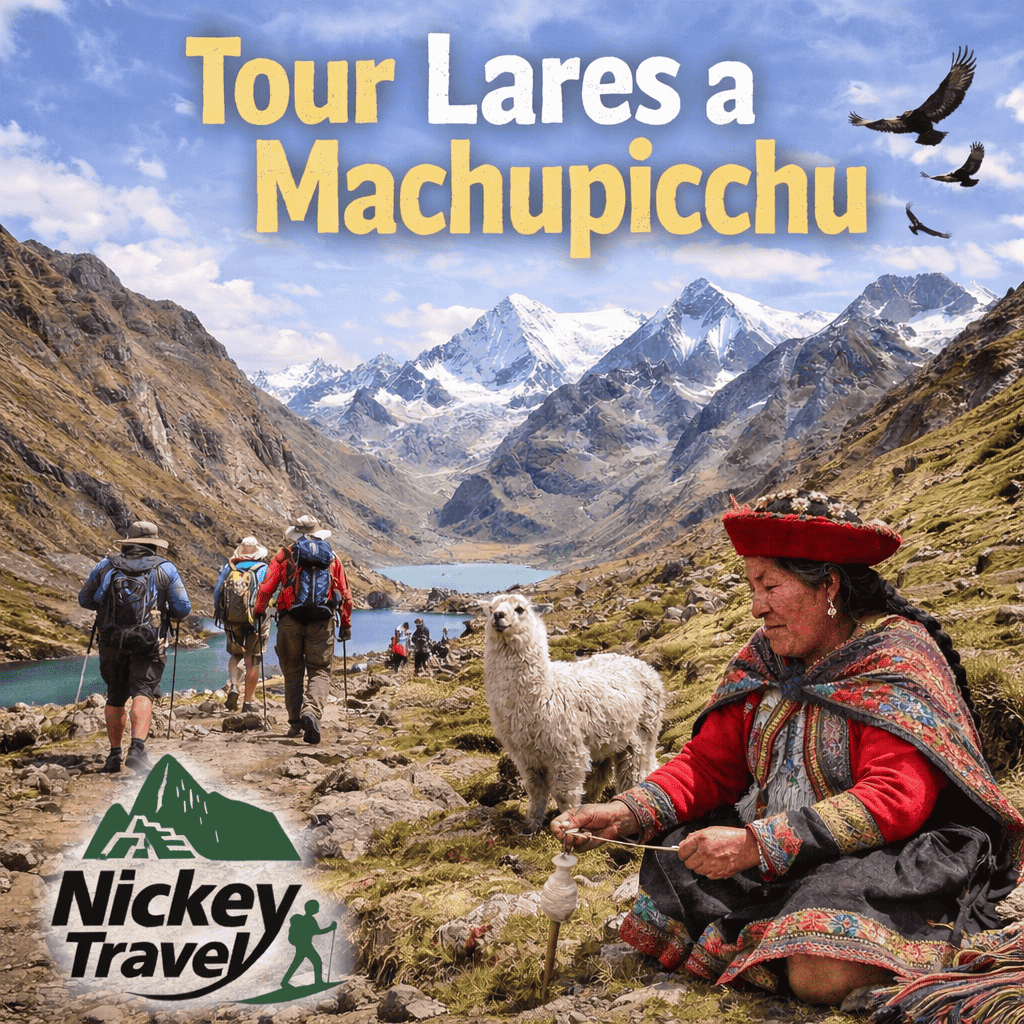
The Tour Lares a Machupicchu is one of Peru’s most authentic and culturally immersive trekking routes. While many travelers choose the Inca Trail, those seeking depth, authenticity, and connection with local life discover that the Lares route offers something more profound.
This is not simply a path to Machu Picchu — it is a journey through living Andean civilization.
Over several days, hikers cross high mountain passes, visit traditional Quechua-speaking villages, observe alpaca herders at work, and walk through landscapes that remain largely untouched by mass tourism.
Geographic Location and Route Overview
The Tour Lares a Machupicchu takes place in the Lares Valley, northeast of Cusco, within the Sacred Valley region of Peru.
Typical duration: 3–4 days of trekking + Machu Picchu visit.
Sample Itinerary
Day 1: Cusco – Transfer to Lares – Hot Springs – Trek to campsite
Day 2: High mountain pass (approx. 4,400 m) – Glacial lakes – Huacahuasi
Day 3: Descent to Patacancha – Ollantaytambo – Train to Aguas Calientes
Day 4: Guided exploration of Machu Picchu
Historical and Cultural Context
The Lares region has been inhabited for centuries by Andean communities who maintain agricultural systems predating the Inca Empire.
Although the route does not feature large archaeological sites like the Inca Trail, it offers something equally valuable — living culture.
The communities along the Tour Lares a Machupicchu preserve:
Traditional farming techniques
Ancestral weaving practices
Andean spiritual beliefs
Quechua as their primary language
This makes the experience culturally enriching and educational.
What Makes the Tour Lares a Machupicchu Unique?
Unlike heavily trafficked trekking routes, Lares offers:
Fewer crowds
More flexible itineraries
Greater cultural immersion
Less commercialization
Direct interaction with local families
It is ideal for travelers who prioritize authenticity over prestige.
Andean Communities Along the Route
Huacahuasi
A remote high-altitude village known for alpaca herding and weaving traditions.
Patacancha
Located closer to the Sacred Valley, recognized for high-quality handwoven textiles and vibrant traditional clothing.
Lares Valley Communities
Families rely on subsistence agriculture and livestock. Life remains strongly connected to nature and seasonal cycles.
How Do Local Families Live?
Life in the Andes revolves around:
Homes are typically constructed with adobe walls and simple roofing materials. Many families cook over wood-fired stoves and live without modern infrastructure.
Daily life is physically demanding but deeply rooted in tradition.
Traditional Food of the Lares Region
The cuisine reflects high-altitude agriculture.
Typical dishes include:
Meals are hearty and designed to provide energy in cold climates.
Traditional Clothing and Symbolism
Clothing in Lares communities is not only functional but symbolic.
Women wear layered skirts, embroidered blouses, woven shawls (llicllas), and distinct regional hats.
Men wear wool ponchos, woven belts, and traditional hats.
Textile patterns communicate identity, marital status, and community origin.
Sacred Mountains (Apus)
Visible peaks include:
These mountains are considered sacred spiritual guardians in Andean cosmology.
Flora and Ecosystems
The trek crosses diverse ecological zones:
Biodiversity shifts dramatically with altitude.
Wildlife
Possible wildlife sightings include:
Alpacas and llamas
Vizcachas
Andean condors
Native birds
Climate and Weather Conditions
Dry Season (May–September):
Clear skies
Cold nights (-5°C)
Excellent visibility
Rainy Season (November–March):
Afternoon showers
Greener landscapes
Fewer hikers
Microclimates vary between high passes and Machu Picchu’s subtropical environment.
Who Is This Trek Ideal For?
The Tour Lares a Machupicchu is perfect for:
Difficulty level: Moderate.
Preparation Tips
Final Experience: Machu Picchu
After days of immersion in rural Andean life, arriving at Machu Picchu becomes deeply meaningful.
The contrast between living villages and the Inca citadel creates a powerful emotional experience.
Book Your Tour Lares a Machupicchu
👉 [Insert booking link here]
Experience the Andes authentically.