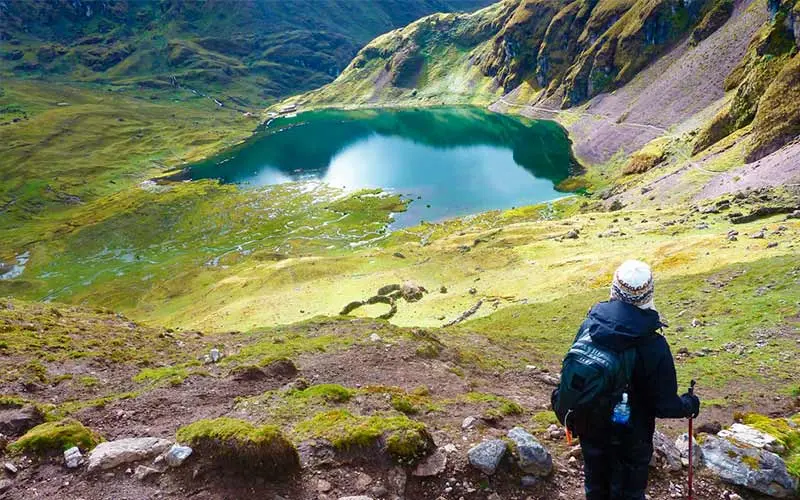
The Lares Trek is one of Peru’s most scenic and culturally rich routes to Machu Picchu, passing through Andean villages, high mountain passes, and hot springs. While the landscapes are breathtaking year-round, the weather on the Lares Trek plays a significant role in your overall experience. Knowing what to expect in each season will help you prepare the right gear, plan your itinerary wisely, and make the most of your adventure.
What Is the Lares Trek?
Before diving into the weather, it’s important to understand the setting. The Lares Trek begins in the Sacred Valley near the town of Calca and climbs into the Andes, reaching altitudes over 4,400 meters (14,435 feet) before descending toward the rainforest gateway to Machu Picchu.
Unlike the Inca Trail, which is limited by permits, the Lares route is open year-round, making it an excellent alternative — but the Andean weather varies dramatically by season and elevation.
What Is the Best Time to Hike the Lares Trek?
The best time to hike the Lares Trek is during the dry season, from May to September, when you’ll experience clear skies, warm days, and spectacular mountain views.
However, each season offers its own charm:
| Season | Months | Characteristics |
|---|
| Dry Season | May – September | Sunny days, chilly nights, best visibility |
| Transition Season | April & October | Mix of sun and light rain, fewer tourists |
| Wet Season | November – March | Frequent rain, lush landscapes, fewer crowds |
If you want to learn more about the best time of year to do the Lares Trek
Dry Season: May to September
Clear Skies and Crisp Air
During these months, daytime temperatures typically range between 15°C and 22°C (59°F–72°F). The air is dry, the trails are firm, and the mountain vistas are at their most stunning. Nights, however, can be freezing — especially above 4,000 meters — with temperatures dropping to -3°C (26°F) or lower.
Advantages
Ideal trekking conditions with minimal rainfall.
Best time for photography due to clear visibility.
Easier river crossings and stable terrain.
Disadvantages
Nights can be extremely cold at high campsites like Ipsaycocha.
More travelers on the route, especially between June and August.
Travel Tip
If you plan to trek between June and August, book early — especially if your itinerary ends with Machu Picchu, since tickets and trains fill up quickly.
Rainy Season: November to March
The Greenest Season in the Andes
The rainy season brings heavy downpours, especially in January and February, but it also transforms the landscape into a vibrant carpet of green. Rain showers often occur in the afternoon, while mornings can still be bright and peaceful.
Temperature Range
Advantages
Fewer hikers, making the experience more intimate.
Lush vegetation, blooming flowers, and active wildlife.
More interaction with local communities, since it’s farming season.
Disadvantages
Slippery trails and muddy conditions.
Occasional landslides or flooded paths.
Cloudy views that can obscure the mountains.
Travel Tip
Bring waterproof gear (rain jacket, backpack cover, gaiters) and quick-dry clothing. It’s also best to carry trekking poles for extra stability on wet ground.
Transition Months: April and October
If you’re looking for a balance between good weather and fewer tourists, April and October are ideal. Rain showers are less frequent, and the valleys still retain their post-rain greenery. These months are excellent for photography, with bright wildflowers and dramatic light over the mountains.
Why Choose the Shoulder Season?
Pleasant mix of dry and green landscapes.
Mild temperatures.
Easier availability for trains, hotels, and Machu Picchu entrances.
How Cold Does It Get on the Lares Trek?
At the highest points, such as Ipsay Pass (4,450 m), nighttime temperatures can dip below freezing. In contrast, lower valleys and villages like Huacahuasi or Patacancha are milder, averaging 5°C to 10°C (41°F–50°F) at night.
The variation between day and night can be extreme, so layering is essential.
| Location | Altitude (m) | Average Day Temperature | Average Night Temperature |
|---|
| Lares Hot Springs | 3,100 | 20°C | 8°C |
| Huacahuasi | 3,800 | 15°C | 3°C |
| Ipsay Pass | 4,450 | 12°C | -3°C |
| Ollantaytambo | 2,800 | 23°C | 10°C |
Rainfall and Precipitation on the Lares Trek
Rainfall is the single most important weather factor on the Lares route. Annual precipitation averages 900–1,200 mm (35–47 inches), concentrated mainly between December and March. The dry months (June–August) often go weeks without a drop of rain.
Monthly Rainfall Chart (Approximate)
| Month | Rainfall (mm) | Description |
|---|
| January | 180 | Heaviest rain, slippery trails |
| February | 160 | Rain continues, fewer hikers |
| March | 130 | Transition toward dry season |
| April | 80 | Occasional light showers |
| May | 40 | Start of dry season |
| June | 20 | Very dry, cold nights |
| July | 20 | Crisp mornings, clear skies |
| August | 25 | Dry and sunny |
| September | 40 | Mild rain begins again |
| October | 90 | Short, sporadic showers |
| November | 120 | Rain increases |
| December | 150 | Beginning of the rainy season |
What to Pack for the Lares Trek Weather
Packing appropriately for the Lares Trek weather can make or break your experience. Because the climate changes drastically between day and night, valleys and summits, preparation is key.
Essential Clothing
Base Layers: Breathable thermal tops and leggings.
Insulating Layer: Fleece or down jacket for cold nights.
Outer Shell: Waterproof and windproof jacket.
Hiking Pants: Convertible pants with quick-dry fabric.
Footwear: Waterproof hiking boots with good ankle support.
Accessories: Hat, gloves, and buff or scarf.
Rain Gear
Other Essentials
Sunglasses and sunscreen (UV is strong at high altitudes).
Reusable water bottle.
Trekking poles for stability.
Flashlight or headlamp for early morning starts.
Altitude and Weather on the Lares Trek
One unique aspect of the Lares Trek weather is how much it depends on altitude.
In a single day, you might hike from 3,000 meters (9,800 ft) to 4,400 meters (14,400 ft) — experiencing a wide range of temperatures and humidity levels.
Lower valleys: Warmer, more humid, and lush.
High passes: Windy, dry, and much colder.
Descending to Machu Picchu: The climate becomes subtropical, with warmer and more humid air.
It’s important to acclimatize in Cusco for at least two days before starting the trek to avoid altitude sickness.
How Does Weather Affect the Difficulty of the Lares Trek?
The Lares Trek is considered moderate in difficulty, but the weather can greatly influence how challenging it feels:
In the dry season, firm trails make hiking easier, though cold nights may affect sleep.
In the rainy season, muddy paths and swollen rivers add difficulty, requiring more endurance.
Strong sun exposure at high altitude can lead to dehydration and sunburn even when it feels cool.
Proper clothing, hydration, and pacing make a huge difference.
Weather Comparison: Lares Trek vs Inca Trail
Both treks share similar Andean climates, but their geography differs:
| Feature | Lares Trek | Inca Trail |
|---|
| Altitude Range | 2,800 – 4,450 m | 2,400 – 4,200 m |
| Climate | Cooler, more rural valleys | Warmer, more forested |
| Rainfall Impact | Heavier in high passes | Heavier in cloud forest sections |
| Best Season | May – September | May – September |
The Lares Trek tends to be cooler and more exposed to wind at higher altitudes, while the Inca Trail can feel more humid.
Weather and the Lares Hot Springs
A special feature of the trek is the Lares Hot Springs, located at about 3,100 meters (10,170 ft).
The warm mineral pools (35°C–43°C) are especially delightful after a cold day of trekking.
Even during the rainy season, the springs are a highlight — just remember to bring a dry towel and flip-flops for comfort.
Weather and Photography Opportunities
If you’re a photographer or content creator, weather conditions drastically shape your results:
Dry Season: Crisp mountain silhouettes, snow-capped peaks, and golden sunsets.
Rainy Season: Misty valleys, vibrant green hillsides, and dramatic clouds.
April/October: Best lighting contrast between rain and shine.
Early mornings after a night of rain often bring spectacular rainbows across the Lares Valley.
How Climate Change Is Affecting the Lares Region
Like much of the Andes, the Lares Valley is seeing the effects of climate change:
Glaciers are retreating, altering the flow of mountain streams.
Weather patterns are becoming less predictable.
Rains can be more intense and irregular.
Local communities are adapting their agricultural cycles and trekking logistics accordingly. For travelers, it means packing with more flexibility — both in clothing and itinerary.
Expert Tips for Dealing with Lares Trek Weather
Start early: Weather is clearest in the morning; storms often hit in the afternoon.
Dress in layers: You’ll experience multiple climates in a single day.
Keep electronics dry: Use waterproof bags for phones and cameras.
Stay hydrated: The dry mountain air causes rapid dehydration.
Monitor forecasts: Check local weather reports before your trek begins.
Is It Safe to Trek During the Rainy Season?
Yes — but only with proper preparation and guidance.
Reputable agencies (like Happy Gringo Tours or SAP Adventures) monitor weather conditions daily and adjust itineraries if necessary. Some routes may change to avoid landslide-prone sections or flooded trails.
If you trek in January or February, it’s recommended to avoid camping in river valleys and bring extra dry clothing in sealed plastic bags.
Finally
Choosing when to trek the Lares route depends on your priorities:
For best weather: May to September.
For fewer crowds and green landscapes: April or October.
For cultural immersion and solitude: November to March.
Every season has its own beauty, but with the right gear and mindset, the Lares Trek weather will enhance — not hinder — your journey to Machu Picchu.
Lares Tours