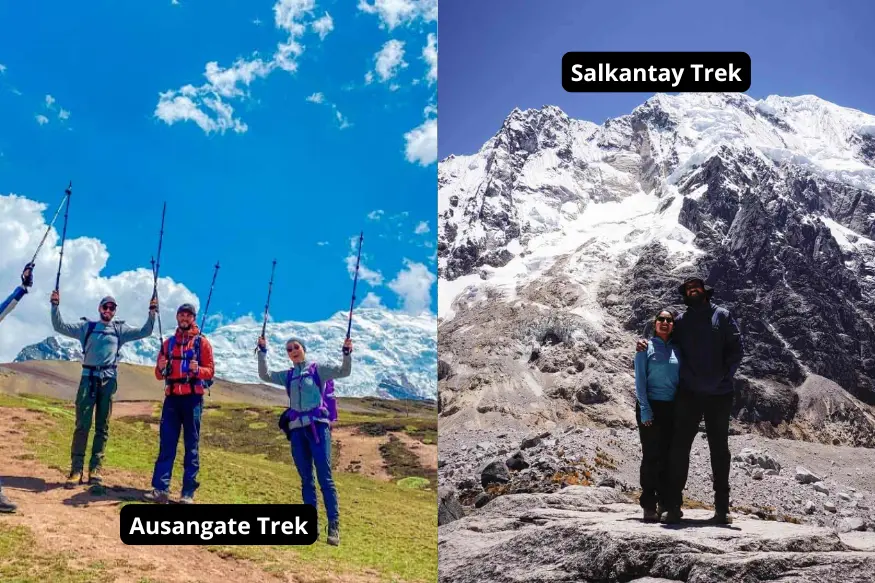
If you’re planning a major trekking adventure around Cusco and want to compare two stand-out alternatives to the classic Inca Trail, this guide is for you. We’ll compare the Ausangate Trek and the Salkantay Trek in Peru — exploring routes, scenery, difficulty, logistics, best time to go and which one aligns with your travel style. The main keyword here is “Ausangate Trek vs Salkantay Trek” so you’ll get detailed content optimized to help your website rank and inform your audience.
Overview of Both Treks
Ausangate Trek
The Ausangate Trek circles around the sacred mountain Ausangate in the Vilcanota range near Cusco, Peru. It’s known for its high altitude, remote Andean scenery, glacial lakes and traditional Quechua-herding communities. The route usually takes 4 to 6 days (some variations 5+ days) and reaches altitudes above 5,000 m. It’s less frequented, more wilderness-oriented.
Salkantay Trek
The Salkantay Trek is one of the most popular “alternate” routes toward Machu Picchu and is known for its dramatic landscape shifts — from high Andes to cloud forest. The highest point is the Salkantay Pass (~4,600 m). Typical durations: 4 to 5 days. It offers strong scenery and connection to Machu Picchu, and more established trekking infrastructure.
Side-by-Side Comparison Table
| Feature | Ausangate Trek | Salkantay Trek |
|---|
| Main Destination / Focus | High-mountain loop around Ausangate, glacial lakes, remote villages | Trek to Machu Picchu via Salkantay Pass, cloud forest descent |
| Typical Duration | 4-6 days | 4-5 days |
| Maximum Altitude | Above ~5,200 m in some passes | Around ~4,630 m (Salkantay Pass) |
| Difficulty Level | Challenging (higher altitude, remoteness) | Moderate-to-challenging (long days, big pass) |
| Scenery & Ecosystems | Alpine glaciers, vivid lakes, puna grasslands | Snow peaks, glacial lakes, cloud forest, subtropical valley |
| Crowds / Popularity | More remote, fewer trekkers | More popular, greater volume of trekkers |
| Infrastructure / Comfort | Less developed, more camping remote | Better developed, options for lodges/hotels |
| Suitability | Truely adventurous hikers seeking solitude | Hikers wanting high scenic reward + Machu Picchu exit |
| Best time / Weather | Dry season critical (May-Sept) | Also dry season better, but more route options |
In-Depth Look: Ausangate Trek
1. The Experience
The Ausangate Trek immerses you in one of the highest and wildest trekking zones around Cusco. You’ll walk past glacial lakes with intense turquoise or green tones, skirt ice-covered peaks, and stay in high altitude landscapes largely untouched by mass tourism. The local herds of llamas and alpacas add to the authentic Andean vibe.
2. Difficulty & Altitude
Because the route stays at high elevation for many days, altitude becomes a major factor. Some passes exceed 5,000 m — making acclimatization essential. The terrain is less frequented, the trail may be less maintained, and weather can turn worse. This trek leans toward experienced hikers.
3. Scenery
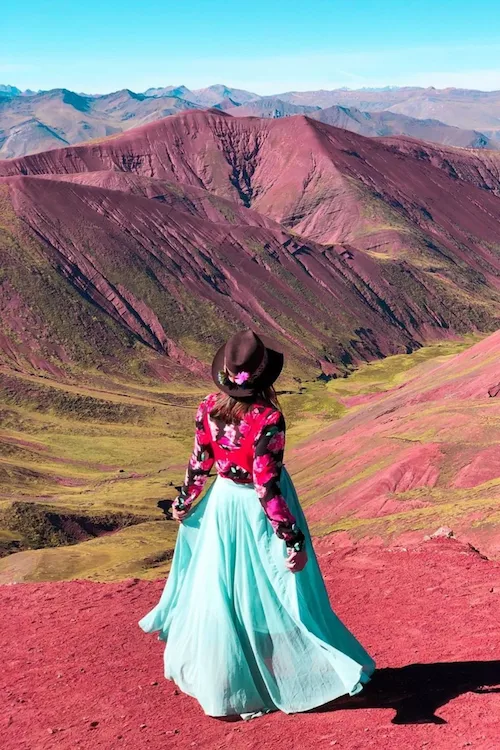
Expect stunning alpine scenery: frozen glaciers, remote lakes, pastel-coloured hills, highland plains with grazing llamas. The “seven lakes” circuit is a highlight. Because of altitude and remoteness, views tend to be grand but your body will feel it.
4. Isolation & Culture
One of Ausangate’s big draws is its low crowd levels. You’ll often have large stretches of trail to yourself. Also you’ll interact with Quechua-speaking herding communities, giving you cultural depth beyond nature.
5. When & Suitability
Best between May and September in the dry season. Nights are cold. You’ll want very good gear, fitness, and ideally spend time in Cusco for acclimatization. If you want tranquil, remote trekking and are physically up to it — this is it.
In-Depth Look: Salkantay Trek
1. The Experience
Salkantay gives sweeping variety. Starting from high Andean terrain you cross the Salkantay Pass (~4,600 m), then descend through cloud forests into warmer valleys, eventually reaching Machu Picchu (or near it). It combines mountain drama and lush environments.
2. Difficulty & Altitude
Although altitude still matters (with the pass being the hardest part), the maximum elevation is generally less than Ausangate. The trail is better trodden, with more support, making it more accessible to a wider range of trekkers.
3. Scenery
From turquoise glacial lakes (e.g., Humantay) to steep Andean ridges and then tropical vegetation and river valleys. Ending at Machu Picchu adds a huge payoff. It’s ideal if you like variety and the classic “Peru trek” feel.
4. Infrastructure & Popularity
Because of popularity, there are many operators, more comfortable lodging/camping options, and more logistical support. That means less wilderness, but more comfort and predictability.
5. When & Suitability
Also best during the dry season (May-Sept). Good for trekkers who want big views + a tangible endpoint (Machu Picchu) without the extreme remoteness of Ausangate. If you want high scenery but less extreme logistics, Salkantay is a strong choice.
Which One Should You Choose? (And Why)
When comparing Ausangate Trek vs Salkantay Trek, think about your priorities:
Choose Ausangate Trek if you:
Are an experienced hiker comfortable with high altitudes and remote trails.
Want solitude, wilderness, fewer crowds and deep Andean landscapes.
Value cultural immersion with herding communities and less tourist routing.
Can commit to high-altitude logistics, strong acclimatization and good gear.
Choose Salkantay Trek if you:
Want a spectacular trek but with somewhat easier logistics.
Are interested in finishing at Machu Picchu or linking to it.
Prefer variety of scenery (mountains + jungle) and more support.
May be trekking for the first time at big altitude and prefer a route with more infrastructure.
Additional Considerations
Fitness & altitude: Both treks challenge you, but Ausangate pushes harder in altitude, remoteness.
Time available: Both can fit in 4-6 days, but check your schedule and how tired you’ll be after.
Season & weather: Both require the dry season for best experience. Rainy months increase risk and discomfort.
Budget & comfort: Salkantay offers more upscale options; Ausangate tends toward true wilderness.
Purpose of trek: If your goal is Machu Picchu, Salkantay aligns with that. If your goal is high-mountain escape, Ausangate dominates.
Practical Tips Before You Book
Acclimatize: Spend 1-2 days in Cusco (~3,400 m) before either trek.
Train: Build cardio and leg strength before you go; practice hiking with a daypack.
Gear up: Especially for Ausangate — good boots, waterproof layers, warm sleeping bag, poles.
Choose dry season: May–September offer best trail conditions and views.
Check operator and route: For comfort, safety, camping standards, emergency support.
Pack light but right: High altitude means every kilo feels heavier.
Respect local culture: Both treks traverse Quechua communities—travel responsibly, support local economy.
Ausangate or Salkantay?
Both routes are among the top trekking experiences in Peru, but they offer very different journeys.
If you ** crave raw, high-mountain wilderness**, seek fewer trekkers, and want deep immersion — go with the Ausangate Trek.
If you seek dramatic scenery, diverse ecosystems, better logistics and want a direct link to Machu Picchu, choose the Salkantay Trek.
There’s no “wrong” choice — only what best fits your adventure style. And whichever you pick, you’ll return enriched by the Andes and its remarkable landscapes.