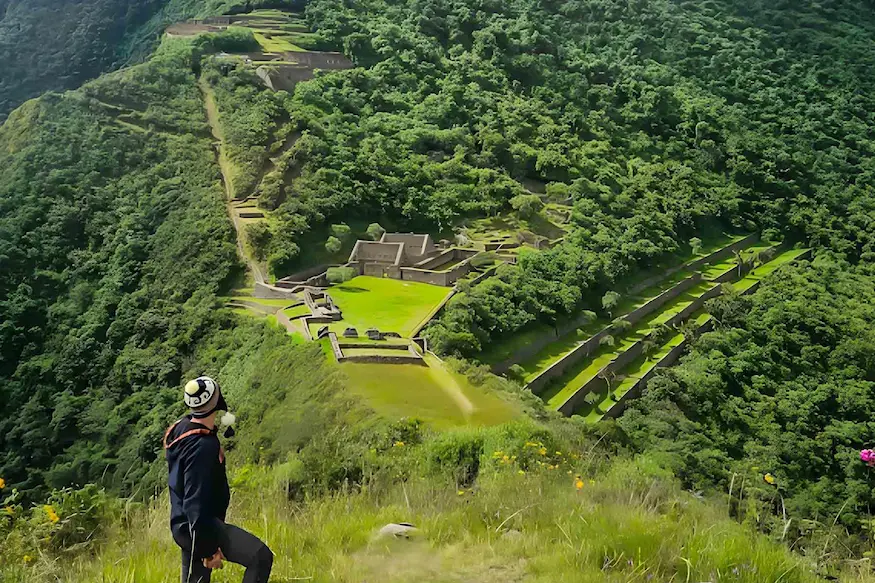
Choquequirao, often called “Machu Picchu’s sacred sister,” is one of the most impressive archaeological sites in the Peruvian Andes. Sitting at 3,035 meters (9,957 feet) above sea level, this hidden citadel lies between the departments of Cusco and Apurímac, surrounded by deep canyons and snow-capped mountains.
Because of its remote location, reaching Choquequirao is possible only on foot through the famous Choquequirao Trek — a challenging yet rewarding multi-day hike through some of Peru’s most dramatic landscapes.
Before starting this adventure, understanding the Choquequirao weather and climate conditions is essential for planning, safety, and comfort.
Where Is Choquequirao Located?
Choquequirao sits on the right bank of the Apurímac River, in the Vilcabamba mountain range of southern Peru. Its position between Cusco (northeast) and Apurímac (southwest) creates a unique microclimate influenced by both the high Andes and the warmer canyon below.
This combination means trekkers experience drastic changes in temperature and humidity during the journey — from the dry mountain air to the subtropical heat of the Apurímac Canyon.
Choquequirao Current Weather (Example)
As of Wednesday, October 29, 2025, the weather near the Choquequirao Archaeological Park is:
Temperature: 18.2°C
Conditions: Patchy rain nearby
Wind: NW at 10.8 km/h (6.7 mi/h)
Humidity: 52%
UV Index: 0.7 (Low)
Sunrise: 05:19 | Sunset: 17:53
Moon Phase: First Quarter
The region often alternates between sunny mornings and cloudy afternoons with occasional showers, typical of Andean microclimates.
What Is the Weather Like in Choquequirao?
The Choquequirao weather is generally temperate and mild, with warm days and cold nights. Due to its elevation and proximity to the canyon, daily temperature variations can be quite noticeable.
Average daytime temperature: 20–25°C (68–77°F)
Average nighttime temperature: 4–6°C (39–43°F)
Annual average temperature: Around 14°C (57°F)
The site enjoys sunshine most of the year, but rain can appear suddenly, especially during the wet season. Dressing in layers is essential to adapt to the rapid shifts between hot and cool air.
Choquequirao Weather by Season
Dry Season (April to October)
The dry season is the best time to visit Choquequirao. Days are sunny and warm, and nights can get chilly — sometimes close to freezing in the higher parts of the trek.
Typical Conditions:
Day: 20–25°C (68–77°F)
Night: 4–6°C (39–43°F)
Rainfall: Very low, clear skies
Humidity: Low, with excellent visibility
This is also the peak trekking season, perfect for photography and camping. However, the sun is stronger, so sunscreen and a hat are essential.
Rainy Season (November to March)
From November to March, rain becomes more frequent, especially in the afternoons. The paths can be muddy and slippery, but the surrounding landscapes turn intensely green.
Typical Conditions:
Day: 18–23°C (64–73°F)
Night: 6–9°C (43–48°F)
Rainfall: Frequent showers, sometimes heavy in January and February
Humidity: High, lush vegetation everywhere
Despite the rain, trekking during this time can still be rewarding for experienced hikers seeking solitude — there are fewer tourists on the trails.
What Is the Weather Like During the Choquequirao Trek?
The Choquequirao Trek is famous for its diversity of climates. The trail passes through several ecological zones, each with distinct weather conditions.
The trek begins in Cachora (2,902 m), descends to the Apurímac Canyon at Playa Rosalina (1,900 m), and climbs again to Choquequirao (3,035 m).
Temperature Variation Along the Route
| Section | Altitude (m) | Typical Temperature | Climate Type |
|---|
| Cachora | 2,902 | 18–25°C | Dry Andean zone |
| Playa Rosalina | 1,900 | 25–32°C | Warm subtropical canyon |
| Choquequirao | 3,035 | 14–25°C (day) / 4°C (night) | Temperate mountain zone |
During the first day, you’ll feel the heat intensify as you descend into the canyon. On the second day, as you climb toward the ruins, temperatures drop again, and mornings can be cold.
This constant up-and-down makes packing correctly crucial — lightweight clothes for the canyon and warm layers for the high camps.
Best Time to Do the Choquequirao Trek
The best time to hike to Choquequirao is during the dry season (April–October).
These months offer clear skies, stable temperatures, and breathtaking views of the Apurímac Canyon and surrounding peaks.
Why the Dry Season Is Ideal
Minimal risk of landslides or river flooding.
Cooler temperatures for climbing steep trails.
Starry skies for camping nights.
Easier photography conditions and visibility.
July and August are the busiest months, while April, May, and September are excellent for fewer crowds and mild weather.
Trekking During the Rainy Season
Although the rainy season (November–March) is more challenging, it has its own advantages:
The vegetation is lush and vibrant.
Fewer hikers, more peaceful campsites.
Rivers and waterfalls are at their most powerful.
However, you must be prepared for slippery trails and occasional landslides. A waterproof poncho, hiking poles, and quick-dry clothing are essential.
7-Day Weather Forecast for Choquequirao (Sample Pattern)
| Day | Condition | High / Low | Rain Chance | UV Index |
|---|
| Wed | Patchy rain nearby | 18°C / 6°C | 10% | Low |
| Thu | Partly cloudy | 22°C / 5°C | 5% | High |
| Fri | Sunny | 25°C / 4°C | 2% | High |
| Sat | Clear | 24°C / 5°C | 0% | High |
| Sun | Patchy rain nearby | 20°C / 6°C | 20% | Moderate |
| Mon | Light showers | 19°C / 7°C | 35% | Moderate |
| Tue | Cloudy | 18°C / 6°C | 30% | Low |
(Data simulated for seasonal reference. Actual conditions vary daily.)
Practical Tips for Dealing with Choquequirao Weather
Start early: Mornings are clear; rain often comes in the afternoon.
Dress in layers: Combine lightweight shirts, fleece, and a waterproof jacket.
Protect from the sun: The UV index is high, even when it’s cloudy.
Hydrate frequently: The dry mountain air causes dehydration faster.
Bring plastic bags: To keep electronics and clothes dry.
Check the forecast: Weather can change quickly at high altitude.
Essential Packing List for Choquequirao Trek Weather
Hiking boots: Waterproof and broken-in.
Rain gear: Poncho or rain jacket, backpack cover.
Warm clothes: Fleece, down jacket, thermal base layers.
Sun protection: Hat, sunglasses, and sunscreen.
Light clothing: For hot canyon sections.
Trekking poles: For steep descents and muddy paths.
Sleeping bag: Suitable for 0°C (32°F) or lower temperatures.
Understanding Choquequirao’s Microclimate
Choquequirao’s microclimate is influenced by three main factors:
Altitude variation: Rapid changes between 1,900 m and 3,000 m create contrasting weather in short distances.
Canyon effect: Warm air rising from the Apurímac Canyon increases daytime temperatures.
Andean humidity: Clouds from the Amazon basin often reach the mountain ridges, bringing afternoon drizzle even in the dry season.
These unique patterns make the Choquequirao trek one of the most dynamic climate experiences in the Andes — where you can start your day under the sun and finish under light rain.
Climate Summary Table for Choquequirao
| Season | Months | Day Temp (°C) | Night Temp (°C) | Rainfall | Best For |
|---|
| Dry Season | Apr–Oct | 20–25 | 4–6 | Low | Trekking, photography |
| Rainy Season | Nov–Mar | 18–23 | 6–9 | High | Green landscapes, solitude |
Conclusion: When to Visit Choquequirao
If your goal is to experience Choquequirao at its best — with stunning views, minimal rain, and pleasant conditions — the dry season (April to October) is the perfect time to go.
However, the rainy season (November to March) also has its magic: greener mountains, blooming flowers, and a mystical fog around the ruins that make it feel like a lost world.
Whatever season you choose, being prepared for sudden weather changes is key to enjoying your Choquequirao adventure safely and comfortably.
The journey may be demanding, but the reward — standing among the terraces and temples of this sacred Inca city — is truly worth it.