Walking the Inca Trail ruins is more than just a hike; it is a journey through history, culture, and the breathtaking landscapes of the Peruvian Andes. This world-famous trail, leading to the sacred city of Machu Picchu, is dotted with archaeological ruins that reflect the genius of the Inca civilization. From ancient fortresses to ceremonial centers and agricultural terraces, each ruin tells a unique story of life in the Andes centuries ago.
In this guide, we will explore in detail the main Inca Trail ruins, their historical importance, and what makes them special. Whether you are planning to trek the Inca Trail or simply want to understand its cultural richness, this article will give you a complete view of the treasures you will encounter along the way.
What Are the Inca Trail Ruins?
The Inca Trail ruins are archaeological sites built by the Incas along the network of roads known as the Qhapaq Ñan, which extended through much of South America. The specific section that leads to Machu Picchu is the most famous, and within it, hikers can visit numerous ruins that served as rest stops, administrative centers, religious shrines, and military posts.
Each ruin along the trail was strategically constructed, not only to provide shelter and control but also to harmonize with the mountains, rivers, and sacred landscapes of the Andes.
Importance of the Inca Trail Ruins
The Inca ruins found on the trail are not random constructions. They had religious, agricultural, and defensive purposes, and were connected to the Inca worldview, which worshiped mountains, water, and the sun.
Some reasons why the Inca Trail ruins are so important include:
They show the architectural mastery of the Incas, especially in the use of stone and terraces.
They connect different parts of the Inca Empire, serving as rest stations.
They provide an exceptional opportunity for modern visitors to experience history while walking through the Andes.
They preserve Inca traditions and engineering techniques that remain admired to this day.
Main Inca Trail Ruins
Below, we present the most important Inca Trail ruins that you will encounter during the trek to Machu Picchu.
Llactapata
The Gateway Ruin
Llactapata, located at an altitude of around 2,840 meters, is often the first major ruin you encounter on the Inca Trail. Its name means “High Town” in Quechua, and it was likely used as an agricultural and administrative center.
The terraces of Llactapata are still visible today, showing how the Incas adapted steep mountains for farming. This ruin is an excellent example of how the Incas combined practicality with aesthetics, integrating construction with the surrounding nature.
Runkurakay
A Circular Wonder
One of the most distinctive Inca Trail ruins is Runkurakay, a small circular structure located at 3,760 meters above sea level. Its purpose is still debated, but many scholars believe it served as a tambo (resting place) for messengers and travelers.
The location of Runkurakay, halfway up a mountain pass, makes it a perfect spot to rest and enjoy panoramic views. Its circular design is rare in Inca architecture, which makes it unique and fascinating for visitors.
Sayacmarca
The Inaccessible Town
Perched on a steep cliff at 3,600 meters, Sayacmarca is known as the “Inaccessible Town.” Its terraces, narrow streets, and ceremonial areas suggest it was a strategic and religious site.
From here, hikers can enjoy breathtaking views of the Aobamba Valley and surrounding mountains. Sayacmarca demonstrates how the Incas built in seemingly impossible locations, maximizing natural defenses and blending with the landscape.
Phuyupatamarca
Town in the Clouds
Phuyupatamarca, meaning “Town in the Clouds”, sits at 3,680 meters and offers one of the most mystical experiences on the Inca Trail. Often shrouded in mist, this ruin contains ceremonial baths, aqueducts, and impressive terraces.
It is believed that Phuyupatamarca was a religious and astronomical observatory, where rituals related to water and the stars were performed. The complex hydraulic system is a testament to Inca engineering brilliance.
Wiñay Wayna
Forever Young
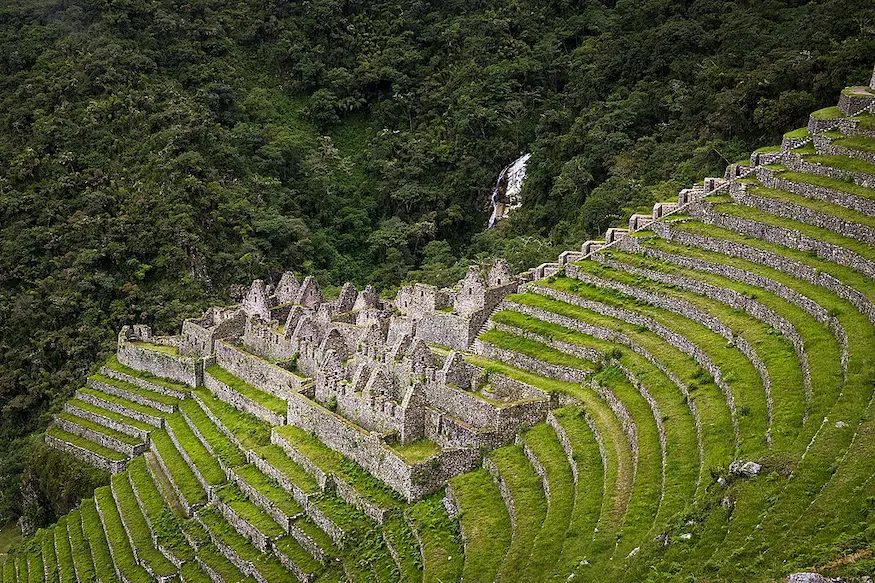
Perhaps the most beautiful of all Inca Trail ruins, Wiñay Wayna means “Forever Young.” Located at 2,650 meters, this site contains agricultural terraces, religious shrines, and residential areas.
Wiñay Wayna is often the last major ruin hikers visit before reaching Machu Picchu. Its proximity to water sources and the lush vegetation surrounding it make it a magical place, full of life and symbolism. It is believed to have been a ceremonial center dedicated to fertility and agriculture.
Intipunku – The Sun Gate
The Final Gateway
Intipunku, or Sun Gate, is not only an archaeological ruin but also the most anticipated viewpoint on the Inca Trail. Located at 2,720 meters, it served as the main entrance to Machu Picchu for travelers arriving from Cusco.
From Intipunku, visitors get their first panoramic view of Machu Picchu, bathed in sunlight at dawn. For many, this is the most emotional moment of the entire trek, symbolizing the reward after days of effort.
Machu Picchu – The Ultimate Inca Ruin
Although the journey focuses on the ruins along the way, the final destination is the Machu Picchu citadel, the most iconic of all Inca ruins. Built in the 15th century by Emperor Pachacutec, Machu Picchu includes temples, palaces, agricultural terraces, and astronomical observatories.
The citadel is considered a masterpiece of world architecture and is recognized as one of the Seven Wonders of the Modern World. Arriving here through the Inca Trail, after visiting ruins like Wiñay Wayna and Intipunku, makes the experience even more special.
Tips for Visiting the Inca Trail Ruins
Book in advance: Inca Trail permits are limited and sell out months ahead.
Acclimate to the altitude: Spend at least 2 days in Cusco before starting.
Bring appropriate gear: Hiking boots, walking poles, and rain gear are essential.
Hire a professional guide: A certified guide will give you deep insight into each ruin.
Respect the ruins: Do not climb on walls or remove stones. Preserve the heritage.
FAQs About Inca Trail Ruins
How many ruins are on the Inca Trail?
There are more than 10 ruins along the classic Inca Trail, including Llactapata, Runkurakay, Sayacmarca, Phuyupatamarca, Wiñay Wayna, and Intipunku.
Which is the most beautiful Inca Trail ruin?
Many hikers consider Wiñay Wayna the most beautiful due to its terraces, lush setting, and proximity to Machu Picchu.
Are the Inca Trail ruins older than Machu Picchu?
Yes, some ruins like Llactapata and Sayacmarca predate Machu Picchu and were part of the road system leading to the citadel.
Do you need a guide to visit the ruins?
Yes, the Inca Trail can only be done with a licensed guide, ensuring preservation and education about the ruins.
Finally
The Inca Trail ruins are more than archaeological remains; they are living witnesses of an advanced civilization that thrived in harmony with nature. Each site along the trail offers a glimpse into the past, preparing hikers for the emotional arrival at Machu Picchu.
Exploring these ruins is a once-in-a-lifetime opportunity to combine adventure, history, and culture in one of the most beautiful landscapes on Earth. If you are planning your journey, remember that the true treasure of the Inca Trail is not just the destination but also the ruins that guide you along the way.